


Artificial Intelligence (AI) is changing how businesses operate, communicate with customers, and manage everyday tasks. One of the most important developments in this field is Generative AI. From creating written content and generating images to developing software and answering customer questions, this technology is helping businesses work faster and improve productivity.
For business owners, understanding Generative AI is important because it offers new ways to solve problems, reduce manual work, and improve customer experiences. Businesses can use it to automate repetitive activities, support decision-making, and develop new products and services. Theoddcoders Technologies, recognized among the best AI development companies in India, helps businesses explore these opportunities through modern AI solutions and technology expertise. As a technology partner, the company focuses on helping businesses identify practical ways to implement AI based on their goals and requirements.
What is Generative AI?
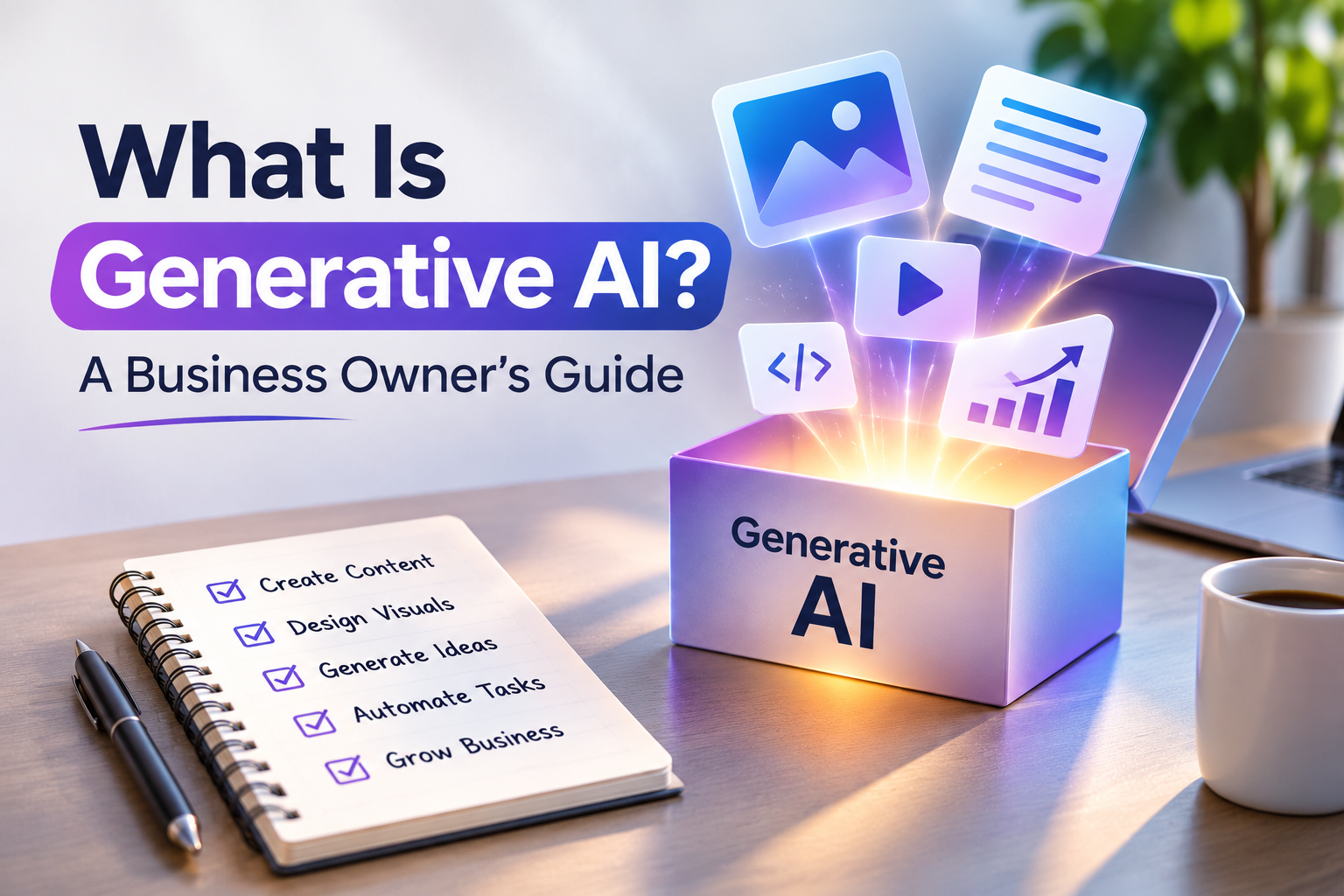
Generative AI is a type of artificial intelligence that can create new content using patterns and information learned from existing data. Unlike traditional AI systems that mainly analyze information or make predictions, Generative AI can produce original outputs such as text, images, videos, audio, and computer code.
For example, when you ask an AI tool to write an email, summarize a document, create a product description, or generate an image, it uses Generative AI to produce a response.
These systems are trained using large amounts of data. They learn patterns, relationships, and structures from that information and use what they have learned to generate relevant results based on user instructions.
How does Generative AI Work?
Generative AI works through machine learning models that learn from large datasets. These models identify patterns in information and use them to generate new content.
Here is a simple explanation of how the process works:
1. Data Collection
The first step involves collecting large amounts of data, such as text, images, audio, videos, or code. This information helps the AI model understand different patterns and relationships.
2. Model Training
The collected data is used to train an AI model. During training, the model learns how information is structured and how different elements relate to one another.
3. User Input or Prompt
Users provide instructions or questions called prompts. For example, a business owner might ask an AI tool to create a marketing email or summarize a customer feedback report.
4. Content Generation
The AI model processes the prompt and generates an output based on its training and the information provided.
5. Review and Improvement
The generated content can be reviewed, edited, and improved to meet business requirements. Human review is important because AI-generated results may sometimes contain incorrect or incomplete information.
What are the Different Types of Generative AI?
Generative AI can create different types of content depending on the model and technology being used.
1. Text Generation
Text-based AI tools generate written content from user instructions. Businesses can use them for:
- Writing emails and business documents.
- Creating website content and product descriptions.
- Summarizing reports and lengthy documents.
- Preparing customer support responses.
- Generating marketing ideas.
2. Image Generation
Image generation models create visual content based on text prompts or reference images.
Businesses can use this technology to develop marketing visuals, product concepts, advertising creatives, and design ideas.
3. Audio and Voice Generation
Generative AI can create human-like speech, voiceovers, and audio content. It can also convert written text into speech.
Common applications include virtual assistants, customer service systems, voice-based applications, and training materials.
4. Video Generation
AI video generation tools can create short videos from text prompts, images, or other visual inputs. Businesses can use them for promotional videos, product demonstrations, and educational content.
5. Code Generation
Generative AI can assist developers by writing code, explaining programming concepts, identifying errors, and suggesting improvements. This can help development teams save time during software development.
How can Businesses Use Generative AI?
Generative AI is useful across different industries. Businesses can implement it in several ways depending on their operations and customer needs.
Here are some practical applications:
1. Customer Support Automation
Businesses can use AI-powered chatbots to answer common customer questions, provide product information, and guide visitors through basic processes.
These systems can reduce the workload on support teams and help customers find information more quickly.
2. Marketing and Content Creation
Marketing teams can use Generative AI to create blog outlines, social media captions, email campaigns, advertisements, and product descriptions.
It can also help businesses generate content ideas and organize marketing activities.
3. Business Process Automation
Generative AI can assist with repetitive administrative tasks, including document preparation, report summaries, information extraction, and email drafting.
This allows employees to spend more time on important business activities.
4. Software Development
Development teams can use AI tools to generate code suggestions, explain technical errors, create documentation, and support software testing.
Companies offering software development services in Ahmedabad can also integrate Generative AI into custom applications to improve functionality and automate specific business processes.
5. Personalized Customer Experiences
AI can analyze customer preferences and interactions to help businesses provide more relevant recommendations, product suggestions, and communication.
For example, an online store can use AI to recommend products based on a customer’s browsing activity and previous purchases.
6. Data Analysis and Reporting
Generative AI can help businesses understand large amounts of information by summarizing reports, identifying patterns, and presenting important findings in an easy-to-understand format.
Interesting Read: Can AI Transform Your Business? Here’s How to Find Out
What Are the Benefits of Generative AI for Business Owners?
Generative AI offers several benefits that can help businesses improve their daily operations.
1. Saves Time: AI can handle repetitive tasks and generate content quickly, helping employees focus on other responsibilities.
2. Improves Productivity: Teams can use AI tools to speed up research, content creation, documentation, and development activities.
3. Supports Better Customer Experiences: AI-powered assistants can provide quick responses and help customers find relevant information.
4. Encourages Innovation: Businesses can experiment with new product ideas, services, and digital solutions using AI-generated outputs.
5. Reduces Manual Work: Automating routine activities can reduce the time employees spend on repetitive processes.
6. Supports Business Growth: AI-powered applications can help businesses manage increasing workloads and improve operational efficiency.
What is the Difference Between Generative AI and Traditional AI?
Although both technologies use artificial intelligence, they serve different purposes.
| Generative AI | Traditional AI |
| Analyzes existing information | Creates new content |
| Identifies patterns and makes predictions | Generates text, images, audio, and code |
| Commonly used for classification | Commonly used for content generation |
| Helps detect unusual activities | Helps create new responses and ideas |
| Supports data-driven decisions | Supports creative and automated tasks |
For example, traditional AI can identify whether a customer transaction looks suspicious, while Generative AI can create a summary explaining unusual transaction patterns.
Both technologies can work together to build more useful business applications.
What should Businesses Consider Before Implementing Generative AI?
Although Generative AI offers many opportunities, businesses should understand its limitations before adopting it.
Here are some important factors to consider:
- Data Privacy: Businesses should protect confidential customer and company information when using AI tools.
- Accuracy: AI-generated information should be checked before it is used for important business decisions.
- Implementation Costs: Businesses should evaluate development, integration, maintenance, and infrastructure costs.
- Security: AI applications should include appropriate security measures to protect business data.
- Human Supervision: Employees should review AI-generated results to ensure they meet business requirements.
- Business Goals: AI solutions should address actual business problems instead of being implemented simply because the technology is available.
Choosing the right AI technology and implementation strategy can help businesses get better results.
How can Businesses Get Started with Generative AI?
Businesses do not need to transform their entire operations immediately. They can begin with smaller projects and gradually introduce AI into different processes.
Consider these steps:
- Identify Business Requirements: Find tasks that take too much time or require repetitive manual work.
- Choose the Right AI Application: Decide whether you need a chatbot, content generation tool, document automation system, or custom AI application.
- Evaluate Available Technology: Compare suitable AI models, platforms, and development approaches.
- Start with a Small Project: Build a basic solution and test how well it performs.
- Measure Performance: Evaluate accuracy, productivity, customer experience, and overall business value.
- Improve and Expand: Make necessary changes and introduce AI into other business processes when appropriate.
For businesses working with visual data, AI implementation may also require specialized expertise. Companies looking to Hire Generative AI Developer India can explore solutions such as image recognition, object detection, facial recognition, and automated visual inspection.
Conclusion
Generative AI is changing the way businesses create content, manage operations, interact with customers, and develop digital products. It offers practical opportunities to save time, improve productivity, and introduce new services. However, successful implementation requires choosing the right technology, protecting business data, and understanding where AI can provide real value.
Businesses looking to adopt AI should start by identifying their requirements and selecting solutions that support their long-term goals. Theoddcoders Technologies helps businesses explore AI opportunities through custom development, intelligent applications, and modern software solutions. With the right strategy and technical support, businesses can use Generative AI to improve their operations and support long-term growth.
Frequently Asked Questions About Generative AI
1. Is Generative AI the Same as Artificial Intelligence?
No. Artificial Intelligence is a broad field that enables machines to perform tasks that usually require human intelligence. Generative AI is a branch of AI focused on creating new content, including text, images, audio, videos, and code.
2. Can Small Businesses Use Generative AI?
Yes. Small businesses can use Generative AI for content creation, customer support, email writing, document management, and marketing activities. Many AI tools are available without requiring a large development budget.
3. Does Generative AI Replace Human Employees?
Generative AI is mainly used to assist employees and automate repetitive tasks. It can improve productivity, but human judgment, creativity, supervision, and decision-making remain important.
4. Is Generative AI Expensive to Implement?
The cost depends on the type of solution, model, development requirements, integrations, and infrastructure. Businesses can begin with existing AI tools or invest in custom solutions as their requirements grow.
5. Which Industries Can Benefit from Generative AI?
Industries such as healthcare, education, retail, manufacturing, finance, real estate, and information technology can benefit from Generative AI through automation, content generation, customer support, and data analysis.
